For contractors, winning projects often starts online. By 2025, clients research websites before making a decision, so a strong digital presence is no longer optional.
Key takeaways:
- The five must-have contractor website pages are Homepage, About, Services, Portfolio, and Contact.
- A strong homepage makes a clear first impression with professional design and a call-to-action.
- An About page builds trust by telling your company’s story and values.
- A Services page should explain offerings in detail and showcase testimonials or visuals.
- A Portfolio page proves credibility with photos, case studies, or videos.
- A Contact page must make it easy for prospects to reach out with clear info and a form.
- Avoid red flags like slow loading, outdated design, missing photos, or broken links.
Your website is often the first step in winning new business. This article explores the essential pages and strategies to help contractors attract clients and secure more projects.

For many contractors, the craft happens on-site—pouring concrete, framing walls, or wiring new builds. But in today’s construction industry, winning projects often starts long before the first shovel hits the ground. It starts online. By 2026, homeowners, developers, and commercial clients are doing more research than ever before. They’re comparing options, reading reviews, and clicking through websites to decide who feels like the right partner. If your site doesn’t measure up, you may never even get the chance to bid.
That’s why having a strong online presence is no longer optional. A contractor’s website is more than a digital business card—it’s a powerful tool that builds trust, shows off your work, and turns browsers into buyers. To stand out in a competitive market, you need more than a logo and a phone number. You need a website that makes a professional impression, communicates clearly, and shows clients exactly why they should choose you.
1. Homepage: Your Digital First Impression
Think of your homepage as the front door to your business. Just as a well-kept entryway welcomes guests into a home, your homepage welcomes potential clients into your brand. It should be clean, professional, and to the point.
A strong homepage quickly communicates three things: who you are, what you do, and why a client should choose you. That doesn’t mean cramming the screen with every service you offer—it means creating a clear headline, adding a short value statement, and guiding the visitor toward the next step.
Professional photos of your work or team can immediately add credibility. A clutter-free design ensures people don’t get overwhelmed. And a call-to-action, like “Request a Quote” or “View Our Services,” gives visitors a clear path forward. If your homepage doesn’t accomplish this within the first few seconds, you risk losing them to a competitor whose website does.
2. About Page: Building Trust Through Storytelling
Construction projects are big commitments, and clients want to know who they’re working with before they sign a contract. That’s where your About page comes in. It’s not just filler—it’s one of the most visited pages on any contractor’s site.
Instead of writing a generic company history, think of the About page as a chance to tell your story. Share how your company got started, what values drive your work, and what sets you apart from other contractors in your area. Highlight your leadership team, certifications, or community involvement to add layers of credibility.
This section should balance professionalism with personality. Clients don’t just want to hire a contractor; they want to hire someone they feel they can trust. An authentic About page builds that trust before they ever pick up the phone.
3. Services Page: Showing Clients Exactly What You Do
Too many contractor websites fall short here. A simple list that says “Remodeling, Roofing, Plumbing” isn’t enough anymore. Clients want to know exactly what’s included, what makes your service different, and how it benefits them.
A well-structured Services page should break down each offering with its own section. For example, if you do kitchen remodeling, explain the process, showcase before-and-after examples, and describe how you minimize disruption to homeowners. If you handle commercial builds, emphasize your ability to meet deadlines, manage large crews, and work with architects and engineers.
Adding client testimonials or project photos here helps prove your claims. The goal is clarity: clients should walk away from your Services page with no doubt about what you provide and why you’re the right fit.
4. Portfolio/Projects Page: Let the Work Speak for Itself
In construction, nothing builds confidence like proof. A portfolio or completed projects page is where you let your work do the talking. Photos of finished projects, case studies with details about challenges and solutions, or even short video walk-throughs can make a powerful impression.
Don’t just post a gallery without context. Whenever possible, add captions or short write-ups. For example: “Residential remodel in Dallas—completed in 10 weeks, included full kitchen upgrade and energy-efficient window installation.” This kind of detail helps prospects see you as a problem-solver, not just a builder.
A portfolio isn’t just about impressing clients; it also demonstrates consistency. The more examples you show, the easier it is for someone to imagine you successfully completing their project too.
5. Contact Page: Making It Easy to Take the Next Step
It sounds simple, but you’d be surprised how many contractor websites bury or complicate their contact details. Your Contact page should make it as easy as possible for someone to reach you. That means listing a phone number, email address, and office location in plain view.
Adding a simple contact form can encourage quick inquiries, but keep it short—name, phone, email, and a brief message box are usually enough. If you offer free estimates, make that clear. The easier it is to get in touch, the more leads you’ll capture.
Don’t forget to include a call-to-action button here, such as “Schedule a Free Estimate” or “Get in Touch Today.” Clients expect a next step, and your website should deliver one without making them hunt for it.

Red Flags That Drive Prospects Away
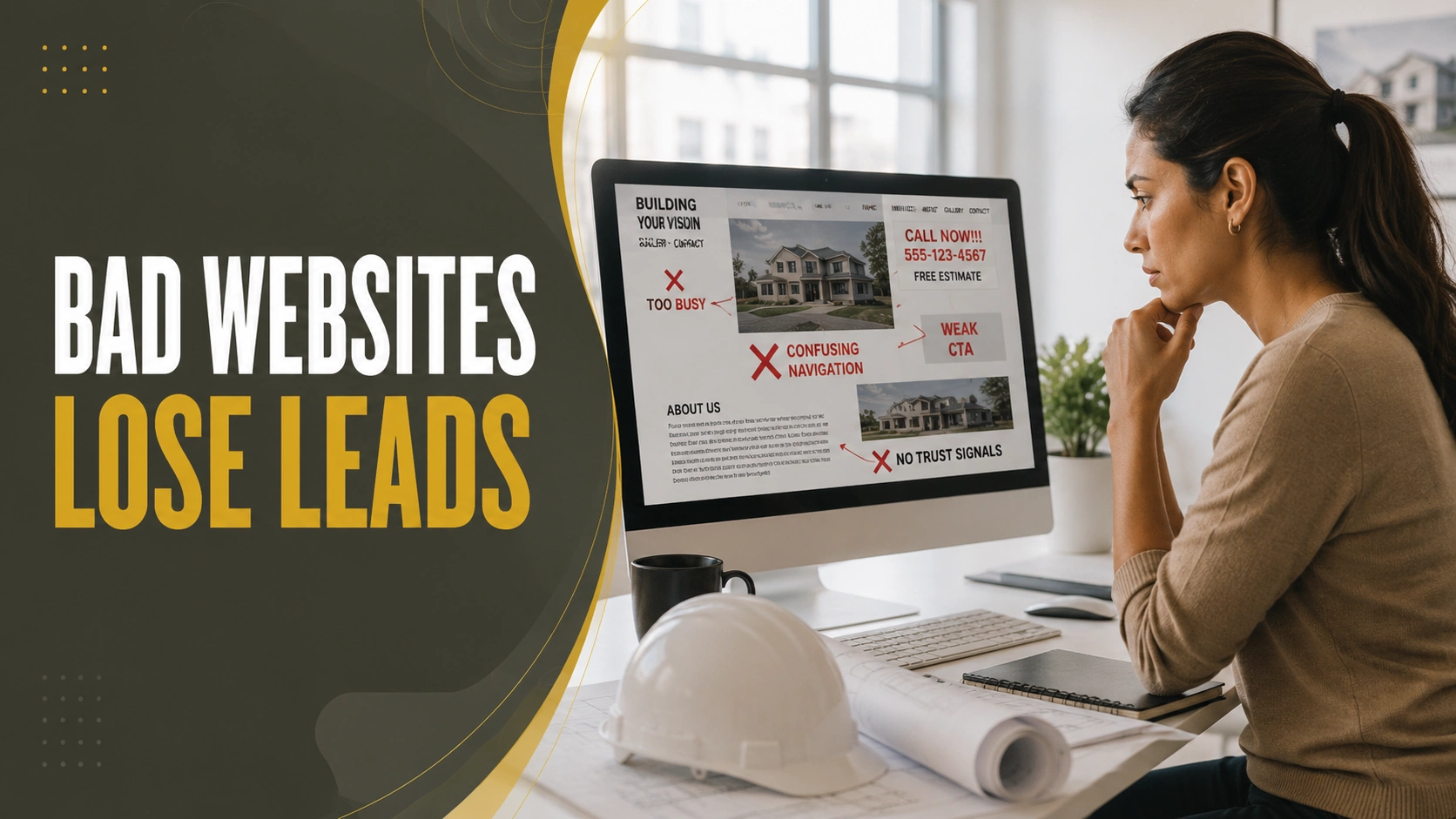
Even if your website has all the right pages, there are certain red flags that can quickly push visitors away. A slow-loading site frustrates users and signals poor maintenance. Outdated design creates doubts about whether your business is modern and reliable. Missing or low-quality project photos make it harder for clients to trust that you can deliver. Confusing navigation leaves visitors feeling lost, and buried or broken contact information sends them searching for someone else. These missteps don’t just hurt appearances—they cost you real opportunities. In a competitive market, a single red flag can be the reason a client chooses a competitor instead.
Putting It into Practice: Your First Steps
Here are some quick actions you can take to improve your website right away:
- Audit your site for loading speed, design quality, and ease of use.
- Refresh your homepage headline to clearly communicate your services.
- Add or update service pages with detailed descriptions and benefits.
- Upload recent portfolio photos that highlight your best work.
- Double-check your contact information to ensure it’s easy to find and functional.
Even small improvements can make a big difference in how prospects perceive your business.
Conclusion
Your website is often the first step in winning new business. With the right pages in place and a professional, client-focused design, you can create a digital presence that attracts, informs, and convinces prospects to choose you. In 2026, the contractors who invest in their websites will be the ones securing more bids, building stronger reputations, and growing their companies.
At Construction Marketing Services, we specialize in helping contractors build websites that not only look great but also deliver results. From strategy and design to ongoing digital marketing support, we make sure your business stands out online. If you’re ready to win more projects with a strong online presence, discover how the right website can transform your business today.