Technical SEO issues can prevent contractor websites from ranking even when content and backlinks are strong. Crawl errors, slow pages, mobile indexing problems, and poor site structure often block search engines from fully understanding a site.
Key takeaways:
- Crawl errors can hide service pages from search engines.
- Mobile-first indexing requires full mobile content parity.
- Slow page speed and poor Core Web Vitals hurt rankings.
- Duplicate content can split ranking authority.
- Mixed-content errors weaken site security signals.
- Orphan pages reduce visibility and crawl efficiency.
When contractors regularly audit and fix technical SEO problems, search engines can properly crawl, index, and rank their websites—unlocking the full value of their content and authority.
Technical SEO is the structural foundation of a digital presence. For contractors, a visually impressive website is irrelevant if search engines cannot navigate the underlying code. While on-page content and backlinks build authority, technical health ensures that this authority is actually recognized by search algorithms. In the competitive search landscape of 2026, small technical oversights often act as a ceiling that prevents even the most reputable firms from breaking into the top results.
Identifying and resolving these issues requires a shift from aesthetic design to infrastructure management. Many contractor sites suffer from site bloat or legacy errors introduced during previous redesigns. By systematically addressing crawlability, speed, and mobile parity, a business ensures that its digital storefront is as reliable as its physical craftsmanship.
Crawl Errors and the Invisible Website
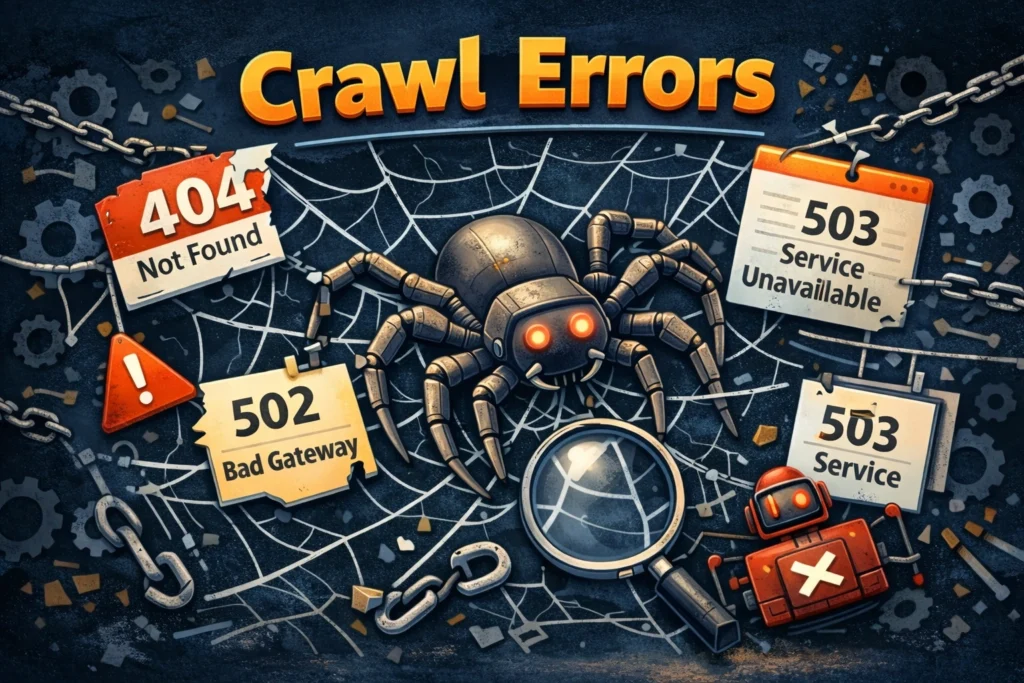
The most damaging technical issue is a failure in crawlability. If a search engine cannot see a page, it cannot rank it. This often occurs when a robots.txt file is improperly configured and inadvertently blocks entire service categories from being indexed. For a diversified contractor, this might mean that while the homepage is visible, high-value pages like Commercial Tenant Improvements are hidden from search bots.
Broken internal links and 404 error pages further complicate this process. When a crawler encounters a dead end, it stops distributing authority to the rest of the site. Regularly auditing for these broken paths is essential, especially after updating a portfolio or changing service names. A clean and error-free crawl path signals to the algorithm that the website is well-maintained and trustworthy.
Mobile-First Indexing and Content Parity
In the mobile-only indexing environment of 2026, search engines exclusively use the mobile version of a site for ranking. A common technical failure for contractors is a lack of content parity between desktop and mobile views. If a detailed project description or a set of technical specifications is visible on a desktop but hidden on a mobile device to save space, the search engine may ignore that data entirely.
Modern mobile design often uses accordions or “read more” tabs to manage space. While search engines now index this hidden content, it must be present in the initial HTML rather than loaded via separate scripts. Ensuring that the mobile experience is as robust and informative as the desktop version is a non-negotiable requirement for ranking.
Page Speed and Core Web Vitals 2.0
Page speed is a quantified ranking factor that directly impacts user retention. In 2026, the Interaction to Next Paint (INP) metric is the primary measure of responsiveness, with a required target of under 200 milliseconds. For contractors, the most frequent culprit for slow speeds is unoptimized imagery. While high-quality project photos are necessary for sales, large file sizes can cause a page to lag and trigger a ranking penalty.
Utilizing next-generation image formats like WebP or AVIF and implementing lazy-loading techniques allows a site to maintain visual quality without sacrificing performance. A site that freezes when a user tries to open a gallery or a contact modal will struggle to maintain a top position regardless of its content quality.
Duplicate Content and Canonical Confusion
Contractors often inadvertently create duplicate-content issues by using similar descriptions for different service locations. When a search engine sees near-identical text on multiple pages, it may struggle to decide which one is the authoritative version. This keyword cannibalization splits the ranking power between several pages and often results in none of them reaching the first page of results.
The solution is the proper implementation of canonical tags. A canonical tag tells the search engine which version of a page is the primary one, which effectively consolidates the ranking power into a single URL. This is particularly important for firms with multiple landing pages for different suburbs. Without this technical directive, the search engine may view the site as a thin or repetitive resource.
SSL Security and Mixed-Content Errors
Site security is a fundamental trust signal for both users and search engines. An insecure warning in a browser can immediately drive away a potential commercial lead. Beyond the basic presence of an SSL certificate, contractors must watch for mixed-content errors. This happens when a secure HTTPS page attempts to load an insecure HTTP image or script.
Search engines treat mixed content as a security vulnerability and may lower the site’s visibility accordingly. Ensuring a site-wide transition to HTTPS, including all legacy images and third-party plugins, is a basic but critical step. A secure environment protects user data and reinforces the professional image that a high-end contractor needs to project.

Disorganized Site Architecture and Orphan Pages
A disorganized site structure makes it difficult for search engines to understand the hierarchy of a contractor’s expertise. Orphan pages are pieces of content that have zero internal links pointing to them. These are rarely indexed and provide no SEO value. This often happens to old blog posts or specific project case studies that are not properly integrated into the main navigation.
A shallow site architecture, where every important page is only two or three clicks away from the homepage, is the ideal technical setup. This ensures that link equity flows efficiently throughout the domain. By organizing the site into logical silos, such as keeping all residential services under one folder and all commercial services under another, the contractor provides a clear map for the algorithm to follow.
Conclusion
Addressing technical SEO issues is a matter of professional maintenance. Small errors like broken links, unoptimized images, or security inconsistencies can silently drain the power from your marketing efforts and hide your best work from potential clients. By identifying these silent killers through regular audits and maintaining a clean site architecture, you ensure that your website remains a high-performance tool for growth. Continuous technical rigor is the only way to maintain a competitive edge and ensure that your digital job site is always ready for inspection.