Local citations, consistent mentions of a business’s name, address, and phone number across directories and platforms, still matter for contractor SEO in 2026, and they’re becoming more important, not less, as AI search tools like ChatGPT and Google’s AI Overviews pull business data from the same sources. Businesses maintaining 100 percent NAP consistency across major directories receive roughly 84 percent more inbound calls than those with scattered, inconsistent listings.
Local SEO for contractors guide covers the broader strategy. This piece focuses specifically on whether citations are still worth the effort, and if so, how many actually matter.
Key Takeaways
- Businesses maintaining 100 percent NAP consistency across 70 directories receive roughly 84 percent more inbound calls than inconsistent ones.
- Consistent NAP across the top 20 directories makes a business roughly 3 times more likely to appear in AI-generated local business recommendations.
- Duplicate listings and NAP inconsistencies suppress map pack rankings on an estimated 73 percent of audited contractor profiles.
- Most US markets need only 40 to 60 accurate, high-authority citations for a strong profile. More beyond that shows diminishing returns.
- 25 accurate citations on high-authority directories outperform 150 citations spread across low-quality, spammy ones.
- AI search tools like ChatGPT and Google’s AI Overviews pull structured business data from the same citation sources that power traditional local search.
What Counts as a Local Citation
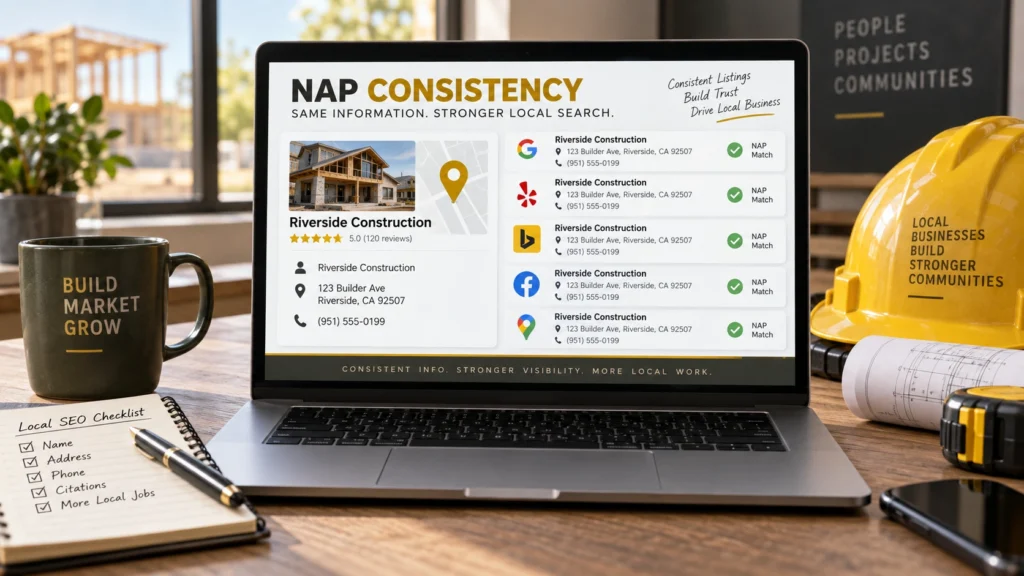
A citation is any online mention of a business that includes its name, address, and phone number, commonly shortened to NAP. That covers more ground than most contractors assume: business directories like Yelp and Angi, social platforms like Facebook and LinkedIn, maps and navigation apps, industry-specific sites, and even mentions in local news or press.
A complete citation record typically extends beyond the basic three fields too, often including a website URL, business hours, primary and secondary categories, a short description, and photos. The more complete and consistent that fuller record is across sources, the stronger the trust signal it sends.
Not every citation carries equal weight. A claimed, verified listing on a major platform like Google Business Profile or Bing Places sends a far stronger signal than an old, unclaimed entry on a low-traffic regional directory nobody actively maintains.
Why Citations Still Matter in 2026
Citations don’t influence how close a business is to a searcher, but they reinforce the other two pillars of local ranking: relevance and prominence. A consistent NAP across trusted sources confirms that a business genuinely exists, operates where it claims to, and is active enough to maintain accurate information.
What’s changed recently is who’s reading that data. ChatGPT, Perplexity, and Google’s AI Overviews increasingly pull structured business information from directories and knowledge graphs when answering local service questions. When those systems encounter conflicting phone numbers or addresses across sources, they treat the business as less trustworthy and are less likely to recommend it, which extends the citation consistency problem well beyond traditional search rankings.
Consider a homeowner asking an AI assistant to recommend a plumber nearby. If that assistant pulls three different phone numbers for the same business across three different sources, the safer response is to recommend a competitor with cleaner, more consistent data, rather than risk sending the homeowner to a number that no longer works. Citation consistency isn’t just a ranking factor anymore. It’s becoming a prerequisite for being recommended at all.
The Tiered Approach: Where to Start
Not all citation sources deserve equal attention, and working through them in the wrong order wastes effort on low-impact listings before the foundational ones are even accurate. A contractor who spends a weekend submitting to fifty niche directories while their Google Business Profile still has an old address has the priority order backward.
| Tier | Examples | Priority |
| Tier 1: Foundational | Google Business Profile, Apple Business Connect, Bing Places, Facebook | Claim and perfect these first, before anything else |
| Tier 2: Major Platforms | Yelp, BBB, Angi, Houzz | High-authority, strong direct signal for home services specifically |
| Tier 3: Data Aggregators | Data providers that feed hundreds of smaller directory sites | Fix once here to correct many downstream listings at once |
| Tier 4: Industry & Local | Trade associations, chamber of commerce, local directories | Adds relevance, but lower priority than Tiers 1 and 2 |
Working top to bottom through these tiers, rather than jumping straight to niche directories, means the highest-authority sources get fixed first, which also tends to correct the most downstream errors with the least total effort. Data aggregators in particular are worth the extra attention, since a single correction there can ripple out to dozens of smaller directories that pull from the same feed.
How Many Citations Actually Move the Needle
Practical contractor local ranking factors treat citations as one signal among several, and the research on citation volume backs that up: most US markets need only 40 to 60 accurate citations on high-authority directories for a strong profile, with returns diminishing well beyond that point. Twenty-five accurate citations on directories that actually carry authority outperform 150 scattered across low-quality, spammy ones.
This matters because citation building services often sell volume: hundreds of directory submissions for a flat fee, regardless of whether those directories carry any real authority or get any real traffic. A contractor paying for 200 low-quality citations is very likely getting worse results than one who carefully claimed and verified 40 to 60 sources that actually matter.
Top-ranking contractors in competitive trades tend to land in a similar range in practice, often around 60 to 70 consistent citations rather than the hundreds some services promise. That consistency across a focused set of authoritative sources does more work than sheer volume ever could.
The NAP Consistency Trap
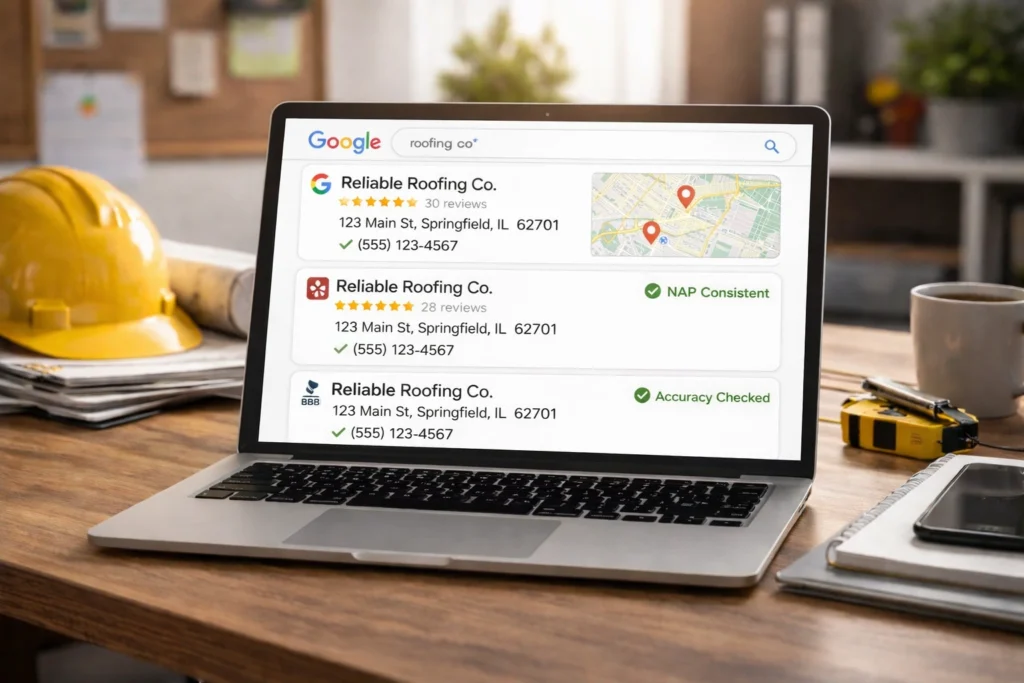
Most citation problems aren’t dramatic. They’re small formatting inconsistencies that accumulate across dozens of listings over years, especially after a move, a rebrand, or a change in service providers, each one small enough to seem harmless on its own. A handful of patterns show up repeatedly:
- “Street” on one listing, “St.” on another
- A suite number formatted differently across platforms, like “Suite 200” versus “#200” versus “Ste 200”
- An old phone number still live on a directory nobody remembers submitting to
- A business name that includes extra keywords on one listing but not another
- Duplicate listings created by a previous agency or citation service, never cleaned up afterward
Each of these looks trivial in isolation, but search engines and AI systems read them as evidence the business might not be a single, consistent entity, which quietly suppresses trust across every listing, not just the inconsistent one. A single wrong suite number tucked away on one directory rarely tanks rankings by itself, but a business with five or six small inconsistencies like this scattered across its citation profile is sending a genuinely confusing signal, even though no individual error looks serious.
Things to Know
- A master NAP document, treated as the single source of truth for every directory submission, prevents new inconsistencies from creeping back in.
- Fixing existing citation errors should happen before building new ones, since new accurate listings don’t cancel out old conflicting data still live elsewhere.
- Data aggregators feed information to many smaller directories at once, so correcting a record there can fix dozens of downstream listings in one pass.
- Citations should be audited quarterly, not set up once and forgotten, since directories change ownership, formatting, and data over time.
- A citation-building service selling hundreds of submissions for a flat fee is usually optimizing for volume, not the authority that actually moves rankings.
- Top-ranking local businesses in competitive trades often maintain around 60 to 70 consistent citations, not the hundreds some services promise.
Frequently Asked Questions
Do local citations still matter for contractor SEO in 2026?
Yes, and they’re becoming more important, not less, since AI search tools now pull structured business data from the same citation sources that power traditional local search.
Businesses maintaining 100 percent NAP consistency across major directories receive roughly 84 percent more inbound calls than those with scattered, inconsistent listings.
How many citations does a contractor actually need?
Most US markets need only 40 to 60 accurate citations on high-authority directories for a strong profile. More beyond that shows diminishing returns.
Quality matters far more than quantity. Twenty-five accurate citations on directories that carry real authority outperform 150 scattered across low-quality, spammy ones.
What’s the biggest citation mistake contractors make?
Building new citations while existing ones still contain errors, which creates conflicting NAP data that actively confuses both search engines and AI systems.
Fixing existing inconsistencies should always come before adding new listings, since accurate new citations can’t fully offset the trust penalty from old, conflicting ones still live elsewhere.
Do citations affect how AI tools like ChatGPT recommend local businesses?
Yes. Businesses with consistent NAP data across the top 20 directories are roughly 3 times more likely to appear in AI-generated local business recommendations.
AI systems read conflicting business data the same way search engines do, as a trust signal problem, which makes clean, consistent citations relevant beyond traditional Google rankings.
Should contractors prioritize general directories or industry-specific ones?
Both, but in a specific order: general Tier 1 platforms like Google Business Profile and Bing Places first, then major review platforms, then industry-specific and niche directories.
Industry-specific directories add relevance, but they carry less weight than getting the foundational, high-authority platforms accurate first.
Getting the Foundation Right
Local citations aren’t a trendy tactic that’s fading out. They’re a foundational trust signal that’s expanding into new territory as AI search tools join traditional search engines in relying on the same underlying data.
Search visibility services for contractors and local visibility services for contractors from Construction Marketing Services include a full citation audit and cleanup as standard practice, paired with local backlinks for contractors strategy that builds authority beyond directory listings alone. If a business’s phone number or address has ever changed, that’s worth checking across directories before assuming everything is accurate.