Page speed impacts lead quality because fast websites create trust, reduce friction, and keep high-intent visitors engaged. For home service businesses, slow pages often drive away urgent, premium leads before they ever call.
Key takeaways:
- Page speed shapes first impressions and trust
- Slow websites push high-value leads to competitors
- INP affects how responsive a site feels to users
- Mobile performance matters most for emergency searches
- Fast websites attract decisive, higher-quality prospects
- AI search engines may favor technically stronger sites
- Speed improves both SEO performance and conversion quality
When home service websites load quickly and respond smoothly, they attract better leads, reduce lost opportunities, and turn technical performance into a real competitive advantage.
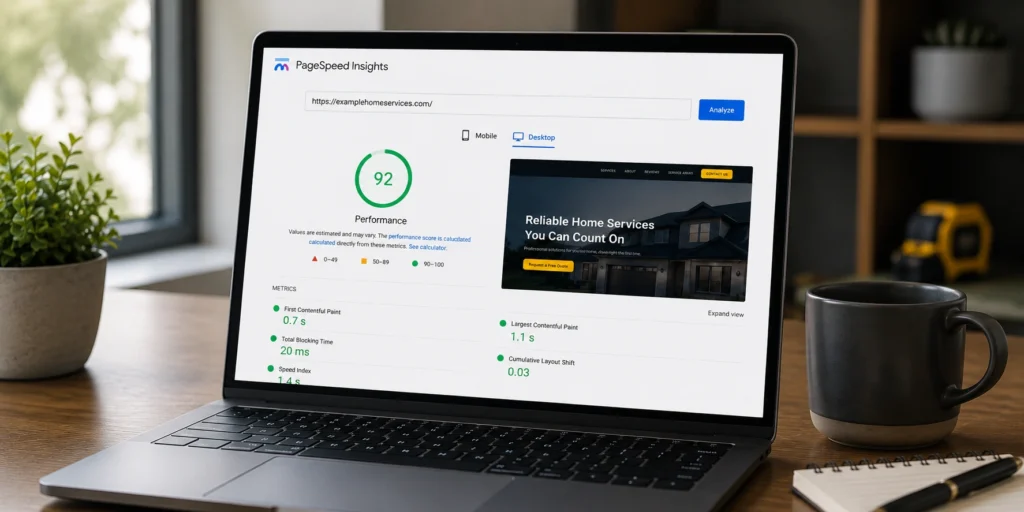
In the fast-paced 2026 digital economy, speed has become a synonym for professionalism. For home-service contractors, the speed at which your website loads is the first “service interaction” a potential client has with your brand. If your site takes five seconds to become interactive, you have already signaled to the user that your business is slow, outdated, or unorganized. While many contractors focus on the aesthetics of their site, the underlying technical performance is what actually determines the quality of the leads you generate.
There is a direct, measurable correlation between page speed and lead quality. High-value clients, those with significant budgets and urgent needs, have the lowest tolerance for digital friction. When your site lags, these “premium” leads bounce almost immediately, leaving you with a higher percentage of “low-intent” traffic and price shoppers who have the time to wait for a slow page to load. To dominate your local market, you must treat page speed as a core sales-enablement tool.
The Psychological Link Between Speed and Trust
When a homeowner is dealing with a stressful situation like a broken HVAC system or a structural issue, their “Cognitive Load” is at its limit. They are looking for an immediate, reliable solution. In this psychological state, a slow website acts as a massive red flag. Subconsciously, the user associates a lagging digital experience with a lagging physical service. They assume that if you cannot manage your website’s performance, you will likely be late to appointments or slow to provide a project estimate.
Fast-loading sites, on the other hand, create an immediate sense of “Digital Competence.” A site that snaps into view and responds instantly to clicks builds a “Trust Foundation” before the user even reads your first headline. In 2026, premium leads equate speed with efficiency. By providing a lightning-fast experience, you are pre-qualifying yourself as a professional who respects the client’s time. This trust is what leads to higher conversion rates for high-ticket services.
Interaction to Next Paint and the Modern User
The metric that matters most in 2026 is Interaction to Next Paint (INP). This measures the responsiveness of your site when a user tries to interact with it, such as clicking a menu or expanding an FAQ. For a contractor, this is where the “Lead Quality” gap is often revealed. A high-intent lead wants to navigate your site quickly to find your licensing, your reviews, and your contact form.
If your INP score is poor, the site feels “heavy” and unresponsive. This technical friction causes the most qualified leads to abandon the site in favor of a competitor whose site feels “snappy.” The leads who remain on a slow, unresponsive site are often those who are less decisive or are simply “window shopping” without a clear intent to buy. By optimizing for INP, you ensure that you are capturing the “Action-Oriented” leads who are ready to book a service call right now.
Mobile Performance and the Emergency Lead
In the home-services sector, the most profitable leads are often those in an emergency. These users are almost exclusively on mobile devices, often with sub-optimal cellular connections. If your website is bloated with unoptimized images and heavy scripts, it will struggle to load in these “Real-World” conditions.
When a site fails to load quickly on a mobile device during an emergency, the user does not wait. They simply click the next result in the Map Pack. This means that slow page speed is effectively handing your best leads to your competitors. To capture high-quality emergency leads, your mobile site must be “Performance-First.” This involves using “Lazy Loading” for images, minimizing “Main-Thread” work, and ensuring that your “Click-to-Call” button is functional the millisecond the page appears on the screen.
Filtering Out the Price Shoppers
Price shoppers and “tire kickers” often have more time to spend on their research. They are willing to tolerate a slower, clunkier website if they think they might find a cheaper deal. Conversely, high-value clients, such as property managers or busy professionals, value their time above all else. They are willing to pay a premium for a contractor who is responsive and organized.
By investing in elite page speed, you are effectively setting a “Professional Standard” for your digital presence. You are attracting the type of client who appreciates and expects a high level of performance. When your site is fast, you attract the “Decision-Makers” who want to solve their problem and move on with their day. This shift in traffic composition leads to a much higher “Lead-to-Job” closing ratio, as you are spending less time chasing people who are just looking for the lowest bid.
The Impact of Speed on AI Search Recommendations
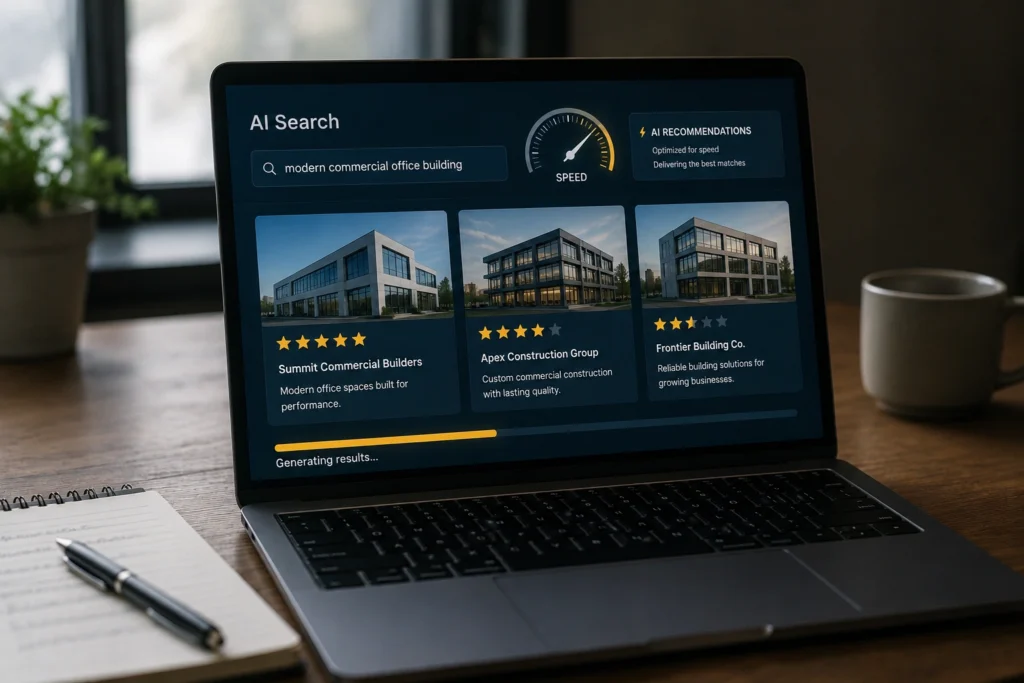
In 2026, AI search engines and “Answer Engines” are the primary way homeowners discover contractors. These AI models do not just look at your content; they evaluate the “Technical Health” of your business entity. A slow, poorly performing website is viewed as a “Low-Quality Signal” by these algorithms.
If an AI assistant is asked to recommend the “best plumber in the area,” it is highly unlikely to recommend a business with a website that fails modern performance benchmarks. The AI wants to provide the best possible experience for its user, and that includes sending them to a site that is fast and easy to use. Therefore, page speed is not just an SEO factor; it is a “Referral Factor” in the age of AI. Slow speed can effectively hide your business from the most qualified leads in your market.
Conclusion
Page speed is the invisible force that determines the quality of your digital leads. In 2026, it is impossible to separate your “Brand Reputation” from your “Technical Performance.” A fast website attracts high-intent, premium clients who value efficiency and professional standards. A slow website, meanwhile, filters for indecisive price shoppers and sends your best opportunities to the competition. By prioritizing technical optimization and mobile responsiveness, you are doing more than just improving your SEO; you are upgrading the entire caliber of your customer base. Speed is the ultimate competitive advantage for the modern contractor.