Contractor websites attract the wrong type of client when they fail to qualify visitors before contact. Generic messaging, stock visuals, unclear service focus, weak process content, and missing local proof can bring in price shoppers instead of serious, high-value buyers.
Key takeaways:
- Commodity language attracts price-focused prospects
- Authentic project photos build trust with premium buyers
- Clear service focus helps filter low-fit inquiries
- Process content attracts organized, serious clients
- Case studies create deeper proof than basic testimonials
- Mobile friction can cost high-intent leads
- Local proof reduces buyer hesitation and increases trust
When contractor websites clearly communicate value, process, project fit, and local credibility, they attract better-qualified clients and reduce wasted conversations with the wrong leads.
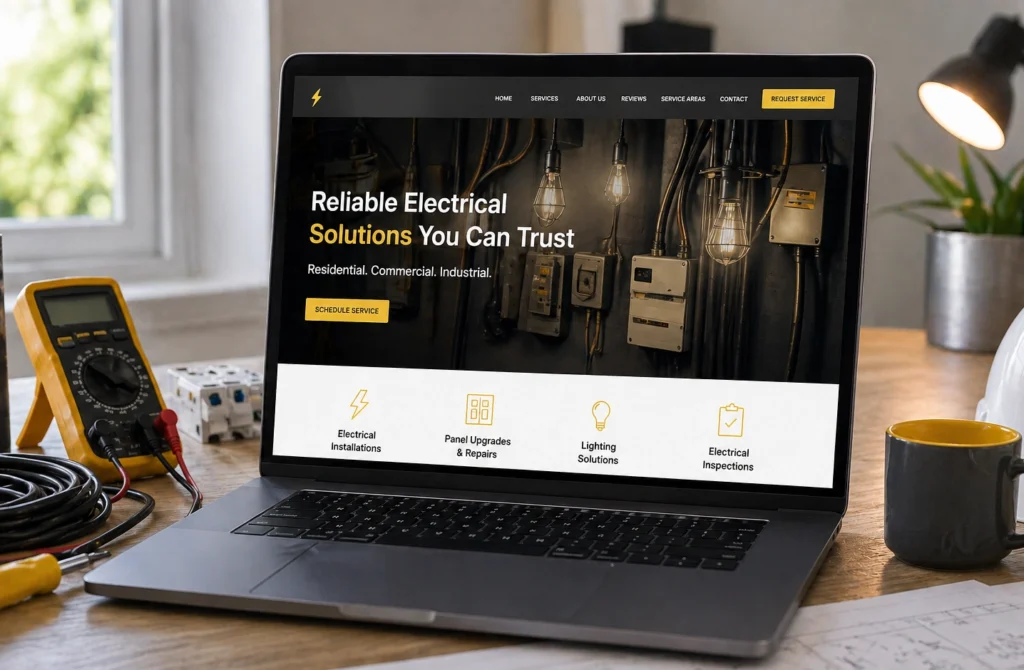
Every contractor has experienced the frustration of a ringing phone that only leads to disappointment. When the majority of your inquiries come from “tire kickers” looking for the lowest possible price, or homeowners wanting small repairs that do not fit your business model, it is not a coincidence. It is a symptom of a digital-messaging failure. In 2026, your website acts as a filter. If that filter is not calibrated correctly, you will spend your valuable time and marketing budget attracting the very clients you are trying to avoid.
Attracting high-value clients requires more than just ranking for general keywords. It requires a deliberate strategy that signals “Premium Professionalism” to both the human user and the AI search engines. To attract the right type of client, you must move away from generic “catch-all” marketing and build a digital presence that proactively qualifies your leads before they ever pick up the phone.
The Trap of Commodity Language
The most common mistake contractors make is using “low-intent” or “commodity-based” language. If your website is filled with phrases like “affordable,” “best prices,” or “cheap repairs,” you are essentially ringing a dinner bell for price shoppers. These keywords attract a demographic that prioritizes cost over quality, safety, or long-term value.
To attract high-value clients, your vocabulary must shift toward “Results-Oriented” and “Value-Based” language. Instead of focusing on price, focus on “investment protection,” “architectural integrity,” “precision craftsmanship,” and “turn-key solutions.” High-ticket clients are looking for peace of mind and specialized expertise. When your website speaks the language of quality and reliability, you automatically filter out those who are only interested in the bottom line.
Generic Visuals and the “Stock Photo” Red Flag
In 2026, premium clients are digitally savvy and highly skeptical. They can spot a stock photo of a smiling “technician” from a mile away. When you use generic, staged images of people who do not work for you, you are signaling that your business lacks its own identity or, worse, that you have something to hide.
High-value projects are sold on trust. If you want to attract a client who is ready to spend $50,000 on a remodel, you must show your actual team, your actual branded trucks, and the “Hidden Details” of your craftsmanship. Authentic, high-resolution photos of complex project sites and professional uniforms tell the client that you are a legitimate, organized, and premium entity. Stock photos attract the “wrong” client because they suggest a “basic” level of service that can be found anywhere.
Failing to Define Your “Ideal Project”
If your website lists every possible service from a $50 faucet fix to a $100,000 custom build, you are confusing the search engine and the client. A high-value lead looking for a complete home renovation may be turned off if your homepage is dominated by “same-day minor repairs.” They want a specialist, not a “jack-of-all-trades” who might be too busy with small calls to focus on their major project.
You must clearly define your “Service Threshold” on your website. Use your service pages to showcase the specific types of high-margin projects you want more of. If you prefer whole-home repiping over simple leak repairs, your content should reflect the complexity and benefits of a full-system upgrade. By narrowing your focus, you actually expand your appeal to the specific, high-value audience you want to serve.
The Absence of Process-Oriented Content
Wrong-type clients are often looking for a “quick fix” and are disinterested in the details. Right-type clients, however, are fascinated by the process. They want to know about your “dust-containment” protocols, your “project-management” software, and your “communication” schedule. They are paying for a premium experience, not just a physical result.
If your website only shows the “After” photo but never explains the “How,” you are missing a massive qualification opportunity. Creating a dedicated “Our Process” page that outlines your professional standards—from the initial consultation to the final walkthrough—is one of the most effective ways to attract high-intent leads. This content scares away the “unorganized” client while providing the “organized” client with the confidence they need to hire you.

Under-Leveraging Case Studies and Deep Social Proof
Standard one-sentence testimonials (“They did a great job!”) do not attract high-value clients. Premium leads look for “Case Studies” that mirror their own situation. They want to read about the “Historic Restoration in [City Name]” or the “Modern Energy-Efficient Upgrade” you completed last month.
A deep-dive case study that explains the challenges of a project, the specialized materials used, and the ultimate satisfaction of the homeowner provides “Social Proof” that a simple review cannot match. In 2026, AI search models use this technical depth to categorize your business as an “Authority.” When you provide evidence of complex, high-stakes work, you attract clients who have complex, high-stakes needs.
Ignoring the “Gatekeeper” of Digital Trust: Professionalism
High-value leads often vet a contractor through multiple digital touchpoints before making contact. If your website is slow, has broken links, or features a “Request a Quote” form that looks like it belongs in 2010, you are signaling a lack of professional standards.
Your digital infrastructure is a reflection of your physical craftsmanship. A premium client assumes that if you do not care about the “User Experience” on your website, you will not care about the “Homeowner Experience” on the job site. Investing in elite mobile performance, modern design, and secure “Click-to-Call” functionality is not just an SEO tactic; it is a lead-qualification strategy that ensures only the most serious and qualified clients reach out to your team.
Conclusion
Attracting the right type of client is a choice you make with every word, image, and technical detail of your website. By replacing commodity language with value-driven messaging, showcasing authentic visual proof, and focusing on the “Experience” of your process, you can transform your digital presence into a high-powered filter. In 2026, the most successful contractors are not the ones with the most leads, but the ones with the most “Correct” leads. When you stop trying to be everything to everyone, you become the only choice for the high-value clients who truly matter to your bottom line.