
Contractors often rank in Google Maps due to proximity and strong GBP signals, but fail in organic results due to weak website authority and content depth.
Key takeaways:
- Map Pack rankings rely on proximity and GBP activity.
- Organic rankings depend on content, backlinks, and SEO.
- Strong local entity does not equal strong website authority.
- Lack of backlinks limits organic visibility.
- Technical issues can prevent organic rankings.
- Ranking in both increases trust and lead volume.
Contractors who strengthen their website authority, content, and technical SEO can bridge the gap and dominate both Map Pack and organic results.
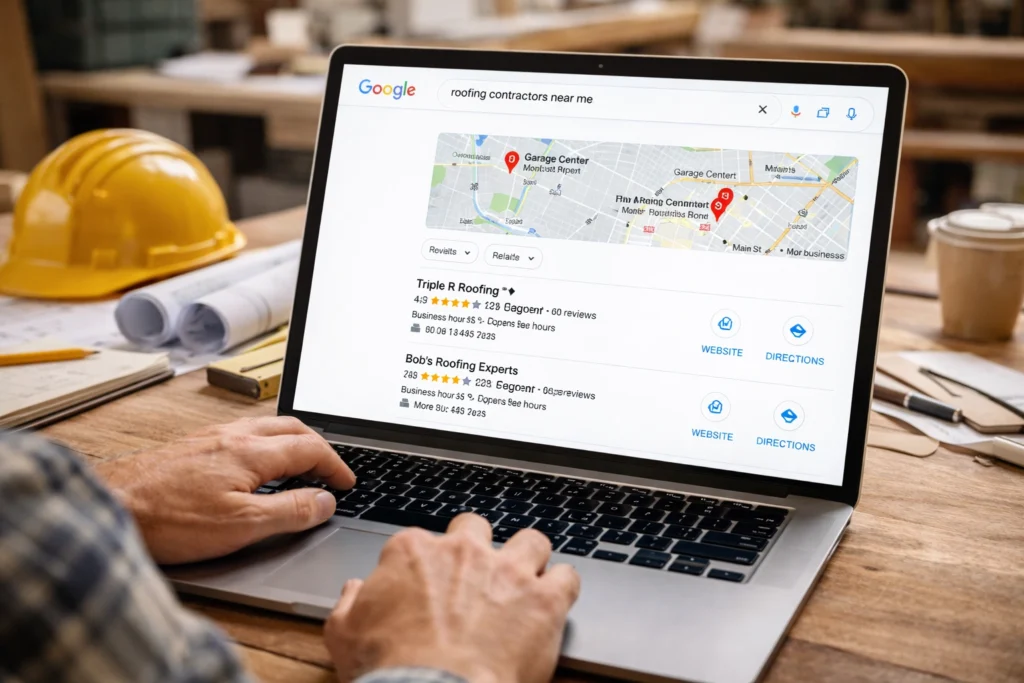
It is a common scenario for a local contractor: you search for your trade in your home city and see your business sitting proudly in the top three results of the Google Map Pack. However, when you scroll down to the blue organic links below the map, your website is nowhere to be found. This disconnect often leads to confusion and a false sense of security. While the Map Pack is a vital source of phone calls, relying on it alone while your organic rankings suffer is a dangerous strategy.
In the search landscape of 2026, Google uses two distinct algorithms to determine these rankings. The Map Pack is driven by proximity, prominence, and your Google Business Profile (GBP) health. Organic results are driven by the technical authority, content depth, and backlink profile of your website. If you rank on the map but not in the organic results, it usually means your local “entity” is strong, but your “digital foundation” is weak.
The Proximity Power of the Map Pack
The primary reason a contractor ranks in the Map Pack without an organic presence is proximity. Google’s local algorithm is heavily weighted toward where the user is standing at the moment of the search. If your shop or verified home office is three miles away from the homeowner, you have a natural advantage in the Map Pack. This geographic “home field advantage” can often overcome a poor website or a lack of backlinks.
However, proximity is a double-edged sword. While it helps you win searches in your immediate neighborhood, it does not help you reach customers ten or fifteen miles away. Organic rankings, on the other hand, are not as strictly tethered to your physical address. A strong organic presence allows you to rank across an entire metropolitan area, even in cities where you do not have a physical office. If you only rank on the map, you are essentially invisible to anyone outside of a very small radius around your base of operations.
The “Entity vs. Website” Gap
In 2026, search engines view your business as an “entity”—a collection of data points including your reviews, your social media presence, and your GBP activity. You can build a very strong entity without ever touching your website. If you have 200 five-star reviews and upload photos to your Google profile daily, the local algorithm will reward you with a Map Pack spot.
Organic rankings require a different kind of effort. The organic algorithm ignores your star rating and instead looks at your “topical authority.” It asks if your website provides the best, most comprehensive answer to the user’s query. If your website is just a single page with a “Contact Us” form and no detailed service descriptions, it will never rank organically. You may be a great local entity, but to the organic algorithm, your website is “thin content.” To bridge this gap, you must build out deep, technical pages for every service you offer.
The Role of Backlink Authority
Organic search results are still heavily influenced by the “authority” of your domain, which is primarily built through backlinks. Most contractors focus on local citations—mentions of their name and phone number on sites like Yelp or Yellow Pages. These are excellent for Map Pack rankings because they verify your location.
However, local citations provide very little “ranking juice” for organic results. Organic rankings require high-quality backlinks from industry-relevant sources, such as trade associations, manufacturers, or home-improvement blogs. If your competitors have spent years building a network of reputable links while you have only focused on local directories, they will dominate the organic results. Ranking on the map but not organically is often a sign that your site lacks the digital “trust” required to compete for those high-value organic spots.
User Intent and Search Generative Experience
In the 2026 search environment, the “Search Generative Experience” (SGE) has changed how users interact with results. AI-driven answers often pull information from both the Map Pack and the organic results to provide a single, cohesive answer. If you only rank in the Map Pack, the AI might mention your business as a local option, but it will pull the technical “how-to” information and pricing guides from your competitor’s organically-ranked website.
This gives your competitor the chance to establish themselves as the expert before the customer even picks up the phone. When you rank in both places, you dominate the “real estate” of the search results page. This “double-dip” strategy increases your click-through rate significantly. Users are far more likely to trust a contractor they see in the Map Pack and again in the top three organic results. It creates a sense of undisputed authority that a Map Pack listing alone cannot achieve.
Technical Site Health and Mobile Speed
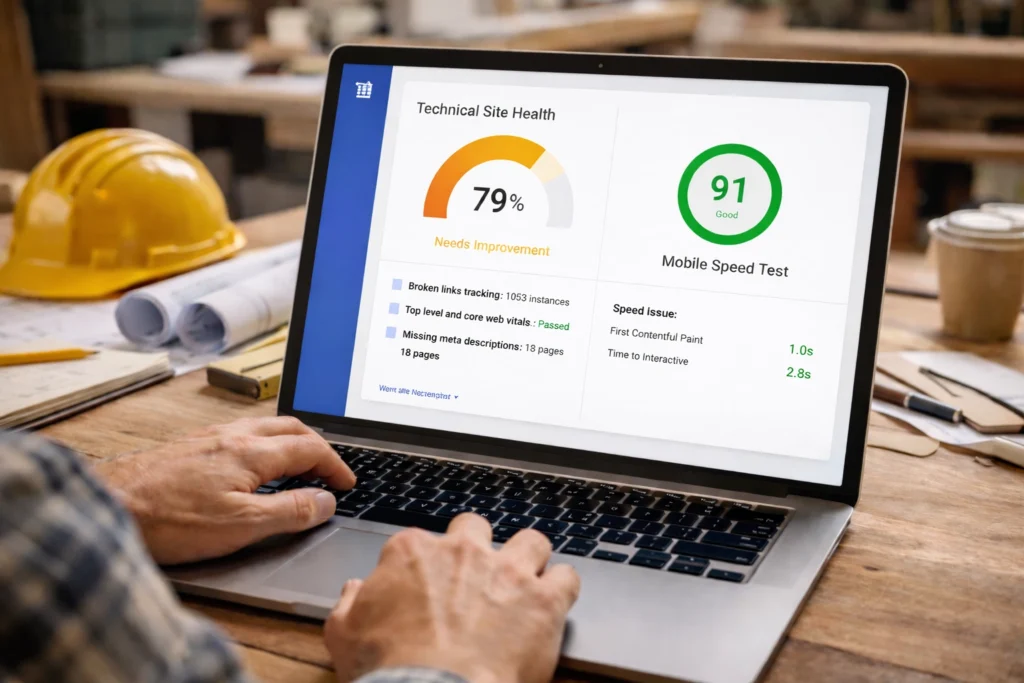
Sometimes, the reason for the ranking gap is purely technical. Google might want to rank your website organically because your local reputation is so high, but your site’s technical issues are holding it back. If your website takes five seconds to load on a mobile device or has broken internal links, the organic algorithm will suppress it to protect the user experience.
The local Map Pack algorithm is slightly more forgiving of technical errors than the organic algorithm. If your GBP is perfect, you can still rank in the 3-Pack even if your website is outdated. However, the organic algorithm views a slow or broken website as a sign of an unprofessional business. Fixing your mobile speed, implementing proper Schema markup, and ensuring a clean site architecture are the fastest ways to start appearing in those organic spots.
Conclusion
Ranking on Google Maps is a great start, but it is only half of a successful SEO strategy. If you are not appearing in the organic results, you are leaving your business vulnerable to competitors who have invested in long-term authority and content depth. To win in 2026, you must treat your Google Business Profile and your website as two parts of a single engine. By building deep content, securing industry-relevant backlinks, and maintaining a high-speed mobile site, you can close the gap and claim your spot in both the Map Pack and the organic results. This “double-win” is the only way to ensure a steady, predictable flow of leads regardless of where the customer is searching from.


