Service pages should own the keywords where someone is ready to hire a contractor for a specific service, usually with a city, a job type, or an urgent need in the phrase. Blog posts should own the questions, comparisons, and problems people research before they choose anyone. Each keyword gets one owning page, and the other page type supports it with a link instead of competing for it.
Key Takeaways
- A service page owns the hire-a-contractor keyword, and a blog post owns the question that comes before it.
- Judge a keyword by the job the searcher wants done, not only by its wording.
- Every keyword gets one owning URL, and the other page type links to it.
- Cost, comparison, symptom, and timeline keywords usually belong on blog posts.
- Service plus city and near me keywords belong on service or location pages.
- The live results page is the best evidence of which page type Google expects.
What Each Page Type Is Built to Do
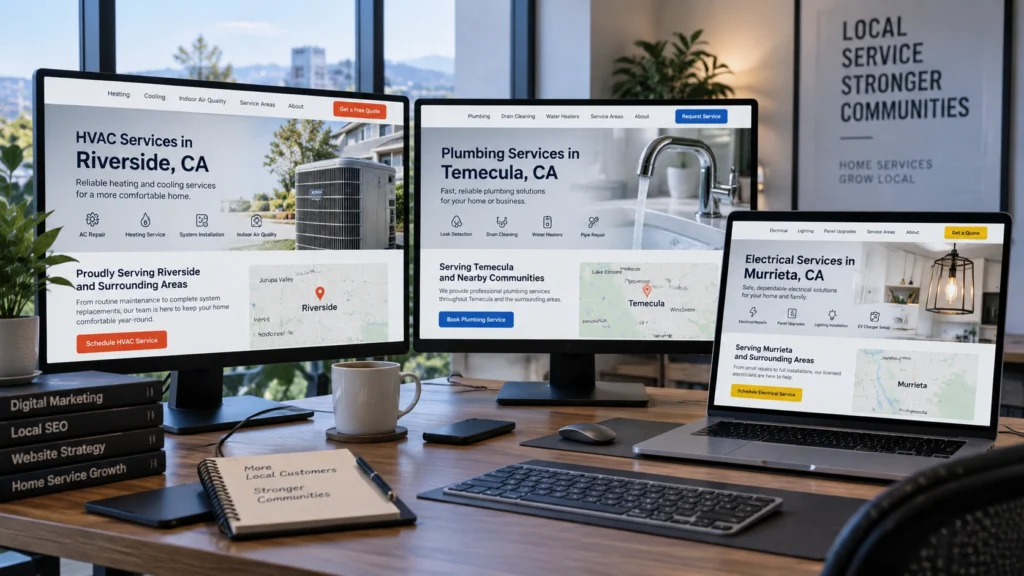
A service page and a blog post can touch the same topic and still do different jobs. A service page exists so a homeowner or property manager can decide to hire. It names the service, describes the scope of work, explains the process, shows where the company works, displays proof such as project photos and reviews, and ends with a clear way to request an estimate. Because it carries the ranking and the sales weight, contractor ranking support usually starts with getting the core service pages right before anything else is published.
A blog post exists to answer one question completely. Someone reading about how long a bathroom remodel takes is not ready to sign a contract, but is forming opinions about who to trust. The post earns that trust by being specific and honest, and then points to the next step. It can run longer and teach more, because the reader is still learning.
The practical difference shows in what each page contains.
- A service page: service name, scope, process, service area, proof, and an estimate request.
- A blog post: a direct answer, supporting detail, real examples, honest limits, and a link to the relevant service.
A page that tries to do both jobs usually does neither well. Long educational answers blur a service page, and a hard sales push in every paragraph costs a post the reader’s trust.
Four Questions That Decide Where a Keyword Goes
Reading a keyword is a good start, but contractor searches are messy, and a short test settles the unclear ones. Ask these four questions in order.
- Could the searcher hire someone from this page? If the phrase describes a service, a place, or an urgent need, a service page is the likely owner.
- Can the question be answered fully without asking for the job? A question like how long deck stain lasts can. One that needs scope, options, and a call to action cannot.
- What does the results page show? If the first page is mostly company service pages, a blog post will struggle. If it is mostly guides, a service page will.
- Does the site already own this keyword? If a page already targets it, improve that page instead of creating a second one.
The order matters. The first two questions describe what the searcher wants, the third checks what Google has decided to show, and the fourth protects the site from competing with itself. When the answers disagree, the results page usually wins, since it shows which page type searchers are being given today.
The Keyword Families Contractors Deal With
Contractor keywords fall into repeatable families, and once a team recognizes the family, assigning an owner takes seconds. The table below shows the most common ones with examples from several trades.
| Keyword Family | Example Search | Owning Page | Role of the Other Page |
| Service plus city | kitchen remodeling in [city] | Service or location page | Blog posts link up with supporting guides |
| Urgent or near me | emergency electrician near me | Service page | No blog post needed |
| Cost | how much does a roof replacement cost | Blog post | Service page summarizes and links to the post |
| Comparison | metal roof vs asphalt shingles | Blog post | Post links to the matching service page |
| Symptom | why is my ceiling stained | Blog post | Post points to the repair service |
| Timeline | how long does a bathroom remodel take | Blog post | Service page links to the post |
| Permit or code | does a deck need a permit | Blog post | Post links to the building service |
| Company name | [company name] roofing reviews | Homepage or service page | Posts do not target it |
Two patterns stand out. Anything with a city, a near me modifier, or an urgent need belongs on a service or location page. Anything that opens with a question word, compares two options, or describes a symptom belongs on a blog post. The families in the middle, cost above all, take a little more thought.
Cost Keywords: The Most Common Overlap
Price searches cause more overlap on contractor sites than any other family. A roofer may have a service page for roof replacement and a blog post on roof replacement cost, and both end up chasing the same price-related phrases. The fix is to split the job. The service page carries a short, honest section on what drives the price, with a link to the full explanation. The blog post owns the whole cost question: materials, roof size and pitch, tear-off, permits, access, and regional differences.
Be careful with exact figures. Prices vary by region and change with materials and labor, so any range should come from the company’s own recent estimates and carry a date. A post that explains why two quotes for the same job can differ builds more trust than one that quotes a single number, and it answers the question the searcher is really asking.
Where Case Studies and Project Pages Fit
Proof content sits between the two page types. A completed project write-up is not a service page, since nobody searches for it by name, and it is not a typical blog post, since it covers one job. It is a supporting page that backs up the service page’s claims. A write-up built around practical contractor case study SEO covers the problem, the work, the materials, and the result, and it links to the service it demonstrates.
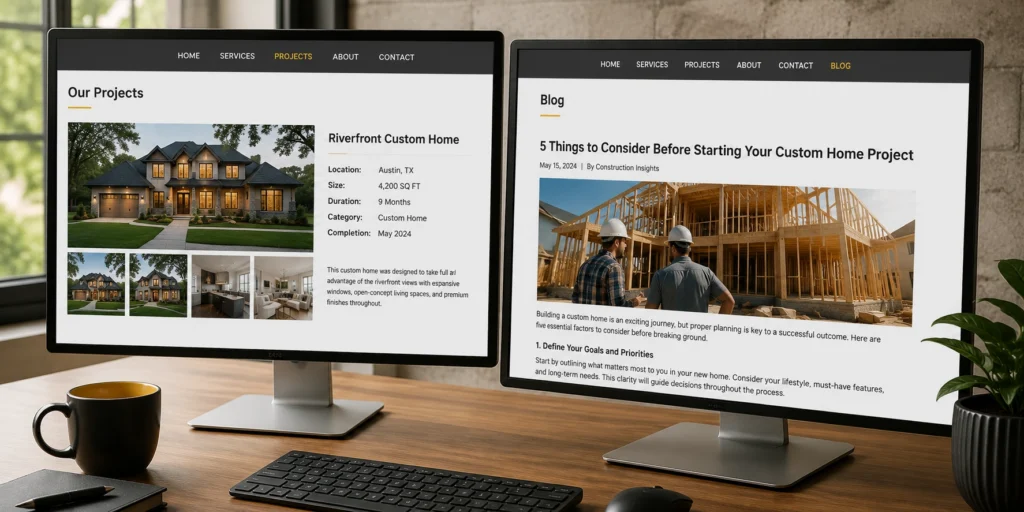
Project pages work the same way on a smaller scale. A finished deck, kitchen, or roof can become a page with photos, scope, and location details, which is the idea behind turning completed jobs into practical contractor project SEO assets. These pages should target the specific project and neighborhood wording, not the service page’s main keyword, so they feed the service page instead of competing with it.
How Blog Posts Hand Readers to the Service Page
Ownership only helps if the pages connect. Every supporting post should link to the service page it supports, ideally in the first third of the article where the reader first sees the connection, using descriptive anchor text that varies from post to post. The post should not try to rank for the service page’s main keyword, because that is exactly what the link is for.
The service page should link back selectively. Pointing to the three to five most useful posts, such as the cost guide and the process explainer, helps visitors who are still deciding. Linking to every post on the topic crowds the page and pulls readers away from the estimate request.
Once each keyword has an owner and the links run in both directions, the pages start working as a group, which is the structure behind contractor topical authority. Teams that outsource SEO content writing for contractors can speed this up by giving writers the owner list with every brief, so each post knows which page it supports and which keyword it must leave alone.
Fixing Pages That Already Overlap
Most established sites already have some overlap, usually a post written years ago that now competes with a newer service page. Search Console shows it. Filter by the keyword, open the Pages view, and look for two URLs earning impressions for the same query. If two pages appear, they are competing.
- Choose the owner using the four questions above.
- Rework the other page to target a narrower phrase, or merge it into the owner if it adds nothing new.
- Link from the supporting page to the owner, and rewrite the title and headings so they no longer match.
- Redirect only fully merged pages, then recheck impressions after a few weeks.
If a blog post is quietly bringing in enquiries for a service keyword, do not turn it into a sales page. Build the dedicated service page and link to it from the post, so the post keeps the traffic it has earned and the service page can be built to convert.
Things to Know
- Google does not publish a rule for which page type should rank for a keyword, so the live results are the best evidence.
- A blog post that mentions a service by name is still a blog post, and should not target the service keyword.
- Service pages should summarize long educational answers and link out instead of repeating them.
- A city name in a keyword almost always signals a service or location page.
- Merging two overlapping pages usually beats keeping both thin.
- Update the keyword owner list every time a page is added, merged, or retired.
Frequently Asked Questions
Should a contractor target the same keyword on a blog post and a service page?
No. Give each keyword one owning page and let the other page type link to it.
Two pages aiming at the same phrase usually split relevance and leave search engines unsure which one to show. Let the service page own the buying keyword, and let the blog post target a related question such as cost, timing, or comparison, with a link pointing to the service page.
Which keywords belong on a contractor service page?
Keywords where the searcher is ready to hire for a defined service, often with a city, near me, installation, repair, or company in the phrase.
Examples include kitchen remodeling in a named city, emergency electrician near me, and roof replacement company. These searches describe a job someone wants done, so the page needs scope, process, service area, proof, and a clear way to request an estimate.
Which keywords belong on a contractor blog post?
Questions, costs, comparisons, symptoms, timelines, and rules that people research before choosing a contractor.
Phrases such as how long a bathroom remodel takes, metal roof vs asphalt shingles, or whether a deck needs a permit are all early research. A post can answer them fully, build trust with the reader, and then point to the service page for anyone ready to move forward.
Can a blog post rank for a service keyword?
Sometimes, but a dedicated service page usually converts those visitors better.
If a post already earns enquiries for a service phrase, build a service page for that keyword and link to it from the post. This keeps the traffic the post has earned while giving ready-to-hire visitors a page built around scope, proof, and an estimate request.
How can a contractor tell which page type Google expects for a keyword?
Search the exact keyword and look at what ranks on the first page.
If most results are company service pages, a blog post will struggle to compete. If most are guides and explainers, a service page is probably the wrong fit. Mixed results mean the keyword can go either way, so choose the owner based on which page the site can answer best.
Giving Every Keyword One Clear Owner
A contractor website works best when every page has a job and every keyword has an owner. Service pages carry the buying searches, blog posts carry the questions that come first, and proof pages show the work behind both. When a new topic comes up, the four questions give a quick answer, and the owner list keeps the answer on record. Over time, that discipline turns a collection of pages into a site that search engines and homeowners can both follow.