Contractors often lose deals before they ever knock on the door, not because of price or workmanship, but because of what happens in the gap between the first call and the scheduled appointment. Reviews they couldn’t find, a license they couldn’t verify, or a booking that never got confirmed are usually enough for a homeowner to quietly talk themselves out of it before you arrive.
This guide breaks down where that trust breaks down between the call and the appointment, what it’s quietly costing you, and what to fix so the deal is still alive by the time you show up.
Key Takeaways
- 91 percent of homeowners say they rely on online reviews before choosing a contractor, and a track record that isn’t visible at first contact doesn’t help you in that decision.
- 43 percent of contractors never respond to the reviews they receive, even though 88 percent of consumers say they prefer businesses that engage with feedback.
- Being the first contractor a homeowner meets is often a worse position than being second or third, since homeowners commit more easily once they have something to compare against.
- Confirmation texts sent between booking and the appointment typically cut no-shows and last-minute cancellations by 25 to 40 percent.
- Homeowners routinely check license status, insurance, and reputation before an appointment, often searching the company name alongside words like “complaint” or “scam.”
- First impressions form in seconds, and for home visits, punctuality and a professional appearance are deal breakers, not nice-to-haves.

The Deal Is Often Decided Before You Show Up
Most contractors assume a lost deal happens in the room, during the pitch or the pricing conversation. Often it’s already decided before that, in the days between the phone call and the appointment, and the contractor never finds out why.
What Homeowners Check Between the Call and the Appointment
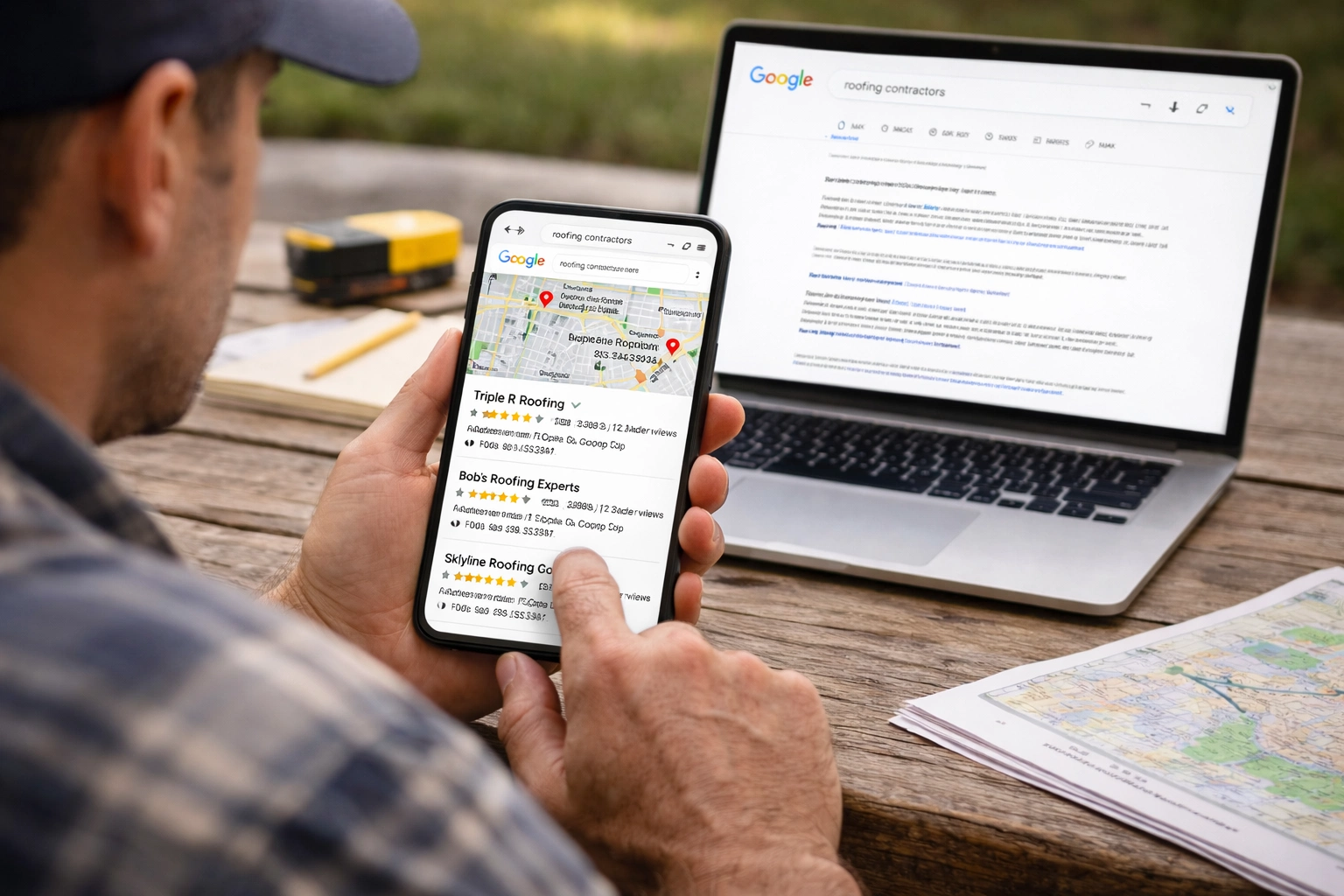
After booking, homeowners routinely look you up: your reviews, your license status, your insurance, and whether your company name turns up anything concerning. None of this takes long, and none of it requires talking to you again. A homeowner comparing three roofers after storm damage might spend ten minutes total across all three, reading a handful of recent reviews and checking whether the license number on your website actually matches a real registration. It happens quietly, and you usually never know it happened unless the appointment falls through.
Why Being the First Appointment Can Work Against You
Contractors who are the first appointment a homeowner takes often close at a lower rate than contractors who come second or third, because the homeowner hasn’t yet built a frame of reference for what a fair price or a solid answer sounds like. A slower close on an early appointment isn’t necessarily a lost deal. It’s frequently a homeowner who needs a comparison first, and a good follow-up after their other appointments often still wins it. Knowing this in advance changes how you should read a quiet response after your first visit. It’s a reason to follow up with confidence, not a signal to write the lead off.
Where Trust Breaks Down Before the Meeting
A handful of specific gaps account for most of the deals that quietly disappear before the first meeting ever happens.
| Gap | What the Homeowner Sees | Fix |
| Thin or unanswered reviews | A company that may not stand behind its work | Claim your profiles, respond to every review, and keep review volume growing between jobs |
| No easy way to verify license or insurance | Can’t confirm you’re legitimate without extra digging | Put license number and insurance info directly on your website and booking confirmation |
| No appointment confirmation | Booking feels informal, easy to forget or cancel | Send a confirmation text right after booking and a reminder before the appointment |
| Vague or evasive pricing on the phone | Feels like a bait-and-switch is coming | Give a realistic range on the call, save exact numbers for the visit |
| Unprofessional arrival | Late, unmarked vehicle, unprepared | Confirm the arrival window, drive a branded vehicle, bring materials ready to reference |
Every one of these is fixable without changing your pricing or your crew. They’re about what’s visible in the gap between the call and the appointment, not about the work itself, which is exactly why they’re so easy to overlook until a good lead quietly goes cold.
Making Your Track Record Visible Before You Arrive
A strong track record only helps if a homeowner can find it in the few minutes they spend checking you out.
Claim and complete your profiles on the platforms homeowners actually check, and respond to every review, good or bad. Put your license number and insurance information somewhere a homeowner can find it in seconds, on your website and ideally in the booking confirmation itself, so verifying you doesn’t require a separate search.
Photos of finished jobs, especially before-and-after shots specific to the type of work you’re quoting, do a similar job. A homeowner deciding between a kitchen remodeler and a general contractor for the same project reads portfolio photos as evidence of a specific skill, not just general competence. If you’ve done five kitchens that look like theirs, showing that up front removes a question they’d otherwise have to ask you in person, and a question removed in advance is one less reason to reconsider the appointment before you arrive.
Turning a Bad Review Into a Trust Signal
A negative review feels like the last thing you want a prospective customer to see, but an unanswered one does more damage than the review itself. A thoughtful, specific reply, acknowledging what went wrong and what you did about it, often reassures a homeowner more than another five-star post does, since it shows how you handle problems rather than just that you usually avoid them. Homeowners comparing contractors before an appointment are looking for exactly this kind of pattern: not a perfect record, but a company that owns its mistakes and responds like a professional when things go sideways.
Confirming the Appointment Without Losing the Deal
A booking that isn’t confirmed again before the visit is easy to forget, reschedule, or quietly cancel.
Send a confirmation message shortly after the homeowner books, and a reminder again closer to the appointment. Keep it branded and specific, with your company name, the date, the time, and a way to reply, rather than a generic system notification that could be from anyone. A message like “Hi [name], this confirms your estimate with [company] on [date] at [time]. Reply YES to confirm or call us if you need to reschedule” takes seconds to send and gives the homeowner an easy way to stay engaged instead of quietly ghosting a booking they’ve had second thoughts about. This does two things at once: it cuts down on no-shows, and it reinforces that they booked with an organized, professional business rather than someone working out of a truck.
If a homeowner doesn’t reply to the confirmation at all, that’s worth a short follow-up call rather than assuming the appointment is still on as planned. A quick check-in along the lines of “just confirming we’re still good for Thursday at two” catches a quiet cancellation before you’ve driven out for nothing, and it gives a hesitant homeowner one more easy, low-pressure chance to reschedule instead of simply not answering the door.

Showing Up Ready to Close, Not Just Show Up
The last chance to lose the deal before it’s really lost is the arrival itself.
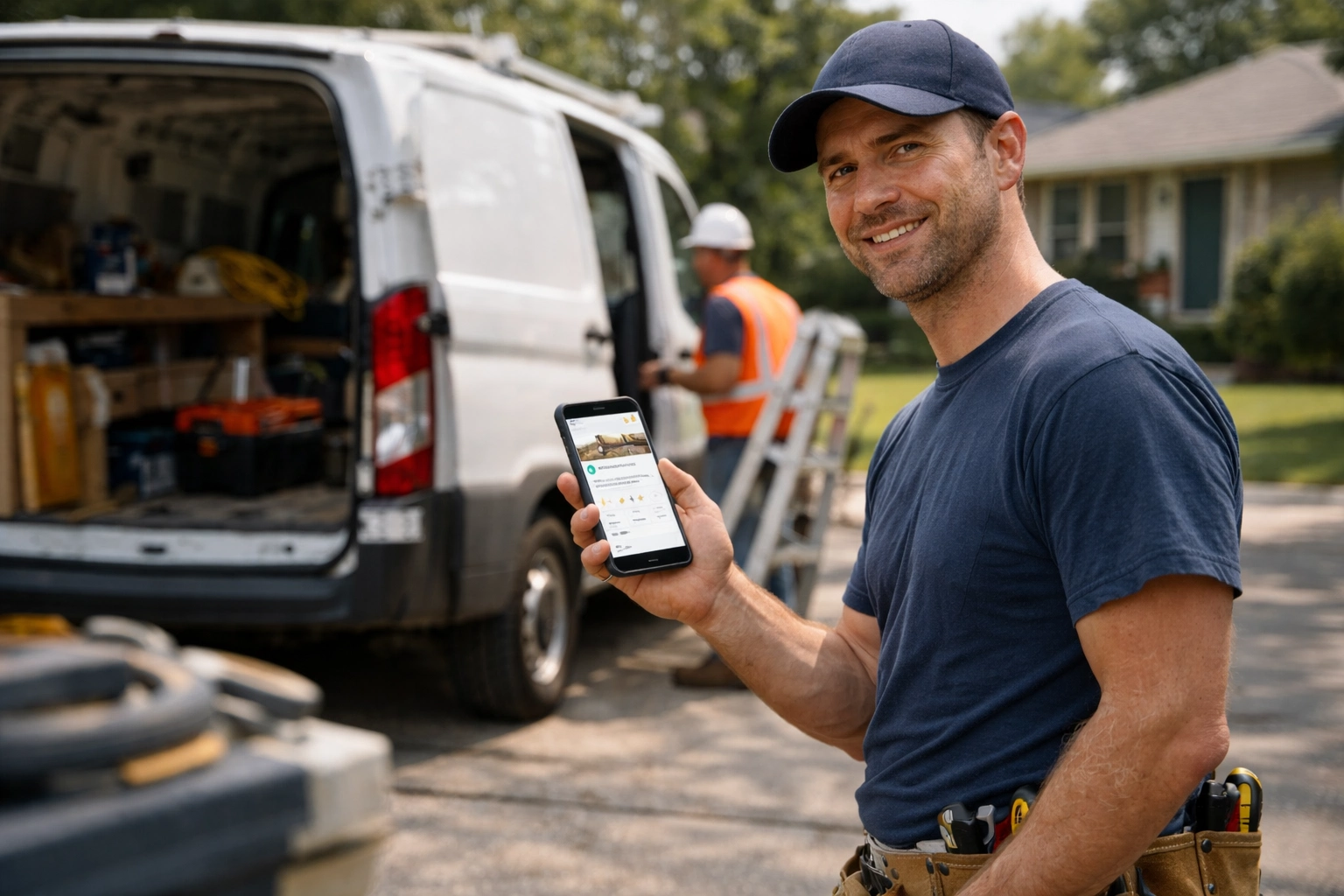
Confirm the arrival window instead of giving a vague morning-or-afternoon estimate, and call or text if you’re running behind, since a late arrival with no warning undoes a week of careful trust-building in a single missed window. A branded vehicle and a prepared folder or tablet with your license, insurance, and past work ready to reference does more to build confidence in the first minute than anything you say. On pricing, give a realistic range on the phone rather than dodging the question entirely. Homeowners who get no pricing signal at all often assume the real number will be a surprise, and that suspicion follows you right up to the front door, showing up as a shorter, more guarded conversation than the one a well-prepared arrival would have earned.
Things to Know
- A high star rating without recent, detailed reviews doesn’t reassure homeowners the way specific, recent comments do, since homeowners read the actual comments, not just the number.
- Homeowners frequently search your company name next to words like “complaint” or “scam” before booking, so what shows up on page one matters as much as your own website.
- A confirmation text is also a small trust-building moment; a professional, branded message reads very differently than a generic system notification.
- Being the second or third appointment a homeowner takes usually closes at a meaningfully higher rate than being the first, since they’ve built context for comparison.
- A realistic ballpark on the phone builds more trust than dodging the pricing question or promising an exact number you can’t give sight unseen.
- Photos of licenses, insurance certificates, and completed jobs on your website do the reassurance work before you ever ring the doorbell.
Frequently Asked Questions
Why do contractors lose deals before ever meeting the homeowner?
Usually because the homeowner researched them between the phone call and the appointment and didn’t find enough reassurance: thin or unanswered reviews, no visible license or insurance information, or a booking process that felt informal.
None of this shows up as a lost sale in the moment. It shows up as an appointment that gets rescheduled and quietly disappears, or a no-show with no explanation.
Do online reviews really affect whether a homeowner keeps the appointment?
Yes. Roughly 91 percent of homeowners say they rely on online reviews before choosing a contractor, and a thin or outdated review profile can undo the confidence a good phone call just built.
It’s not just the star rating. Homeowners read the actual comments looking for patterns around communication, cleanliness, and reliability, and they notice whether a company responds to its reviews at all.
Is it better to be the first contractor a homeowner meets or a later one?
Later is often better. Contractors report meaningfully higher close rates when they’re the second or third appointment a homeowner takes rather than the first, since homeowners tend to commit once they have something to compare against.
This doesn’t mean you should stall on scheduling. It means a slower close on your first appointment isn’t necessarily a lost deal, and a strong follow-up often still wins it.
Do appointment confirmation texts actually reduce no-shows?
Yes. Sending a confirmation message shortly after booking, followed by a reminder before the appointment, typically reduces no-shows and last-minute cancellations by 25 to 40 percent.
A confirmation is also a small trust builder in its own right. A professional, branded message reassures the homeowner they booked with a real, organized business.
Should contractors give pricing over the phone before the appointment?
A realistic range, yes; an exact number, no. Homeowners who get no pricing information at all often assume a bait-and-switch is coming, but a firm number without seeing the job creates its own problems if the estimate changes later.
A ballpark range based on similar jobs sets expectations without boxing you into a number you may need to adjust once you’ve actually seen the property.
Winning the Gap Before the Meeting
Most deals lost before the first meeting never look like a rejection. They look like a reschedule that never gets rebooked, or an appointment nobody mentions again.
The fix isn’t a better sales pitch. It’s making your track record, your credentials, and your professionalism visible in the gap between the phone call and the front door. Construction Marketing Services helps contractors build that visibility online, so the trust is already there before you knock. If your booked appointments aren’t converting the way your phone calls suggest they should, that gap is usually where to look first.