Content gaps hold contractor websites back when important buyer questions are left unanswered. Missing local service depth, pricing guidance, technical explanations, post-service support, and objection-based content can weaken topical authority and reduce conversions.
Key takeaways:
- Content gaps break the customer journey from search to lead
- Local service content should connect services to real area-specific needs
- Pricing and value guidance builds trust before contact
- Post-service content reinforces long-term reliability
- Technical service depth proves real expertise
- Objection-based content helps control buyer concerns
- Complete content improves SEO, trust, and lead quality
When contractor websites close content gaps with local detail, pricing clarity, technical depth, and honest answers, they create a stronger path from search visibility to qualified leads.
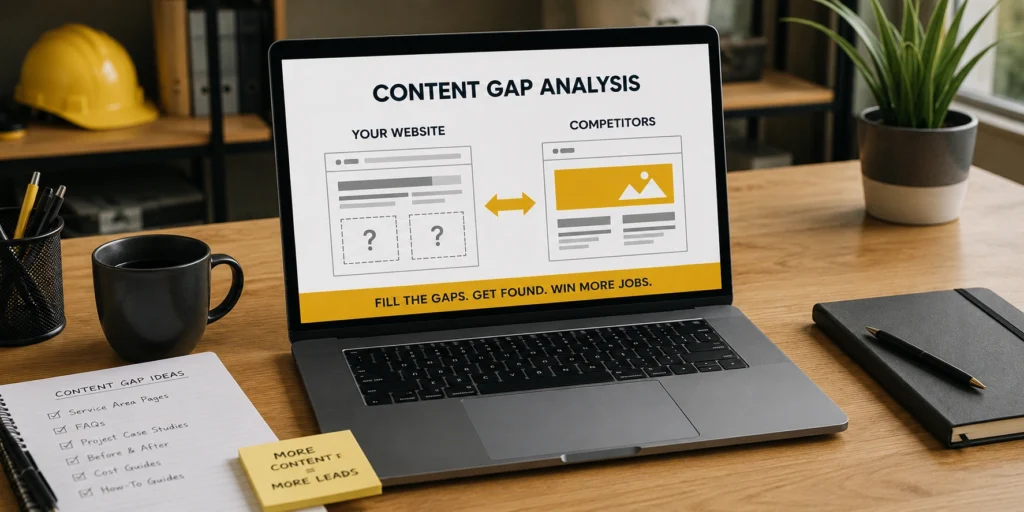
A content gap is more than just a missing page on your website. It is a missing piece of the logical sequence that leads a homeowner from being a stranger to being a customer. In 2026, search algorithms and AI answer engines do not just look for keywords; they look for “Topic Completeness.” If your website covers the “What” but ignores the “How,” the “How Much,” or the “What If,” you are leaving a void that pushes potential leads away. These gaps act as invisible barriers that prevent your site from achieving true topical authority in your local market.
Identifying these gaps requires looking at your website through the eyes of a skeptical, high-value client. Most contractor websites are built around what the contractor wants to say, rather than what the homeowner needs to know. To dominate your region, you must identify where your content stops and where the customer’s questions continue. Closing these gaps is the fastest way to improve your conversion rate and outrank national brands that rely on generic, high-level information.
The Missing Link Between Services and Geography
The most common content gap for local contractors is the failure to connect a specific trade to a specific location with technical depth. Most sites have a generic service page and a separate “Areas We Serve” list. This is no longer sufficient in 2026. A lead in a specific neighborhood wants to know how your roofing service handles the unique micro-climates or architectural styles of their particular area.
If you offer foundation repair, a massive content gap exists if you do not discuss the specific soil compositions found in the local counties you serve. When you bridge this gap by creating hyper-local service content, you provide the information gain that search engines crave. This tells the algorithm that you are not just a contractor who can work anywhere, but the specific expert who understands the unique environmental challenges of a localized area.
Failure to Address the Cost and Value Equation
Many contractors avoid discussing price on their websites because they fear scaring away leads or giving competitors an advantage. This creates the single largest content gap in the industry. In 2026, homeowners start their journey with budget-related questions. If your site remains silent on the factors that influence the cost of a project, the user will go to a site that provides that clarity.
You do not need to provide a fixed quote to close this gap. Instead, provide “Value-Based Guidance” on what drives costs up or down. Explain why a high-efficiency HVAC system costs more upfront but saves money over a decade. Discuss the price difference between various grades of granite or decking materials. By filling this gap, you stop being a vendor and start being a consultant. This transparency builds a level of trust that “Price-Hidden” websites can never achieve.
Neglecting the Post-Service Experience
Most contractor content is focused on the “Before” and “During” phases of a project. There is a significant gap in content regarding what happens after the job is done. High-value clients are deeply concerned about warranties, maintenance, and long-term support. If your website does not have content addressing how you handle “Call-Backs” or what your “Maintenance Plans” look like, you are missing a critical trust signal.
Filling this gap involves creating content that teaches homeowners how to protect their new investment. A guide on “How to Maintain Your New Custom Deck” or “What to Expect During Your First Year with a New Roof” demonstrates a long-term commitment to the client. This content not only attracts search traffic from past customers but also proves to new leads that you are a stable, reliable firm that will not disappear once the final check is cashed.
The Technical Depth Gap in Service Silos
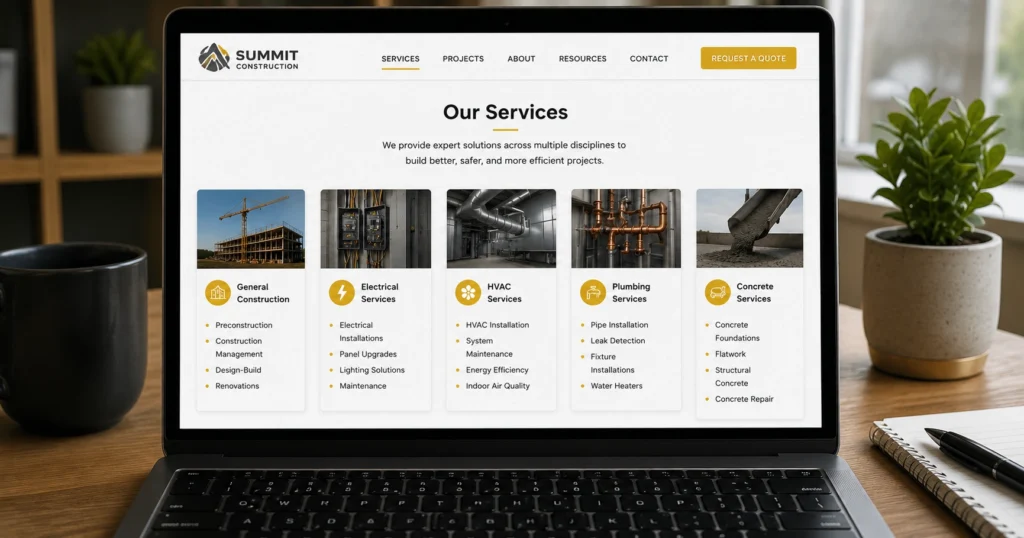
A major gap often exists within the service pages themselves. Many contractors use “Thin Content” that barely scratches the surface of their expertise. For example, an electrical service page might list “Panel Upgrades” as a bullet point without explaining why a homeowner might need one or what the process involves.
In the age of AI search, depth is the new “Secret Sauce.” To close this gap, each sub-service should have its own dedicated section or page that provides “Technical Insight.” Discuss the specific brands you trust, the safety protocols you follow, and the common red flags your team looks for during an inspection. When you provide this level of detail, you satisfy the “Information Gain” requirement of modern SEO and provide the “Evidence of Expertise” that high-budget clients use to vet their contractors.
Ignoring the “Negative Search” or Objections
Homeowners often search for the downsides or risks of a project. They search for things like “the problems with tankless water heaters” or “why a kitchen remodel might go over budget.” Most contractors avoid “Negative” topics, but this is a massive missed opportunity. If you do not address these concerns, you are allowing other websites to shape the narrative.
By proactively addressing common objections or potential downsides, you control the conversation. You can explain how your specific process mitigates those risks. This “Honesty-First” content strategy fills a huge gap in the market. It shows that you have the confidence and integrity to discuss the realities of construction, which is a powerful differentiator in a sea of “Perfect-Only” marketing.
Conclusion
Content gaps are the “Leaky Faucets” of your marketing funnel. You can spend thousands of dollars on traffic, but if your website fails to provide the depth and local relevance that homeowners require, that traffic will never convert. In 2026, the most successful contractors are those who provide the most “Complete” answer to the customer’s problem. By auditing your site for hyper-local connections, price transparency, and technical depth, you can reclaim the leads you are currently losing. Closing these gaps is not just about SEO; it is about building a digital experience that reflects the thoroughness and professionalism of your physical craftsmanship.